Heladeria La Marina Sign
Restoring a historic neon landmark in Regla
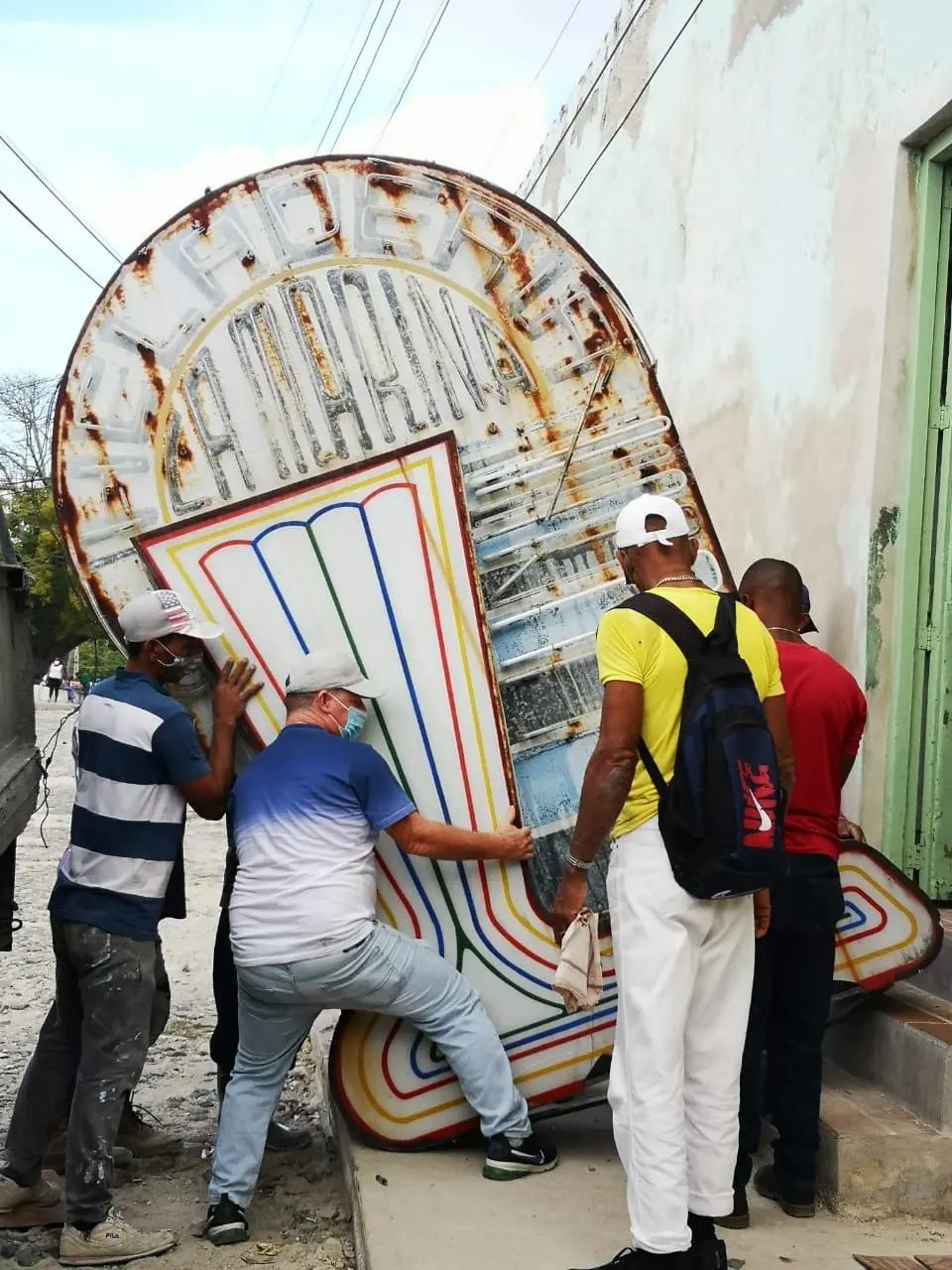

In 2022, Friends of Havana supported a collaborative project with Habana Light and Centro Bahía to restore the historic neon sign of the La Marina ice cream shop in Regla, a neighborhood across the harbor from Old Havana. The project revived one of the area’s most recognizable pieces of urban signage, returning light to a landmark that had been dark for more than two decades.
The initiative was led by artist Felipe Dulzaides through his Centro Bahía platform and by Kadir López, founder of Habana Light, a project dedicated to restoring Havana’s historic neon architecture. The neon element itself was fabricated by François Mignault, a Franco-Canadian artist and specialist in traditional neon bending techniques, who recreated the sign based on surviving fragments and archival images of the original design.
Located on Calle Martí, Regla’s main commercial street near the Parque Guaicanamar, the La Marina sign once played a prominent role in the visual landscape of the neighborhood. As the only neon sign in the area, it served not only to promote the ice cream shop but also as a striking visual element of the street. Restoring the sign has helped reconnect the site with its mid-twentieth-century identity and contributed to the revitalization of the surrounding streetscape.
The restoration formed part of a broader program of public events and artistic interventions organized by Centro Bahía in Regla, which included talks, guided walks, and cultural activities engaging local residents and visiting artists. The relighting of the sign became the culminating moment of the program, celebrated with a public gathering and a performance by the municipal concert band.
For FoH, the project illustrated how small, targeted cultural interventions can help strengthen neighborhood identity while preserving Havana’s unique visual heritage. By supporting partners such as Habana Light and Centro Bahía, the initiative also helped connect local artistic practice with broader efforts to document and revive the luminous architecture that once gave Havana its reputation as the “Paris of the Caribbean.”